
The Letter That Arrived 30 Years Too Late
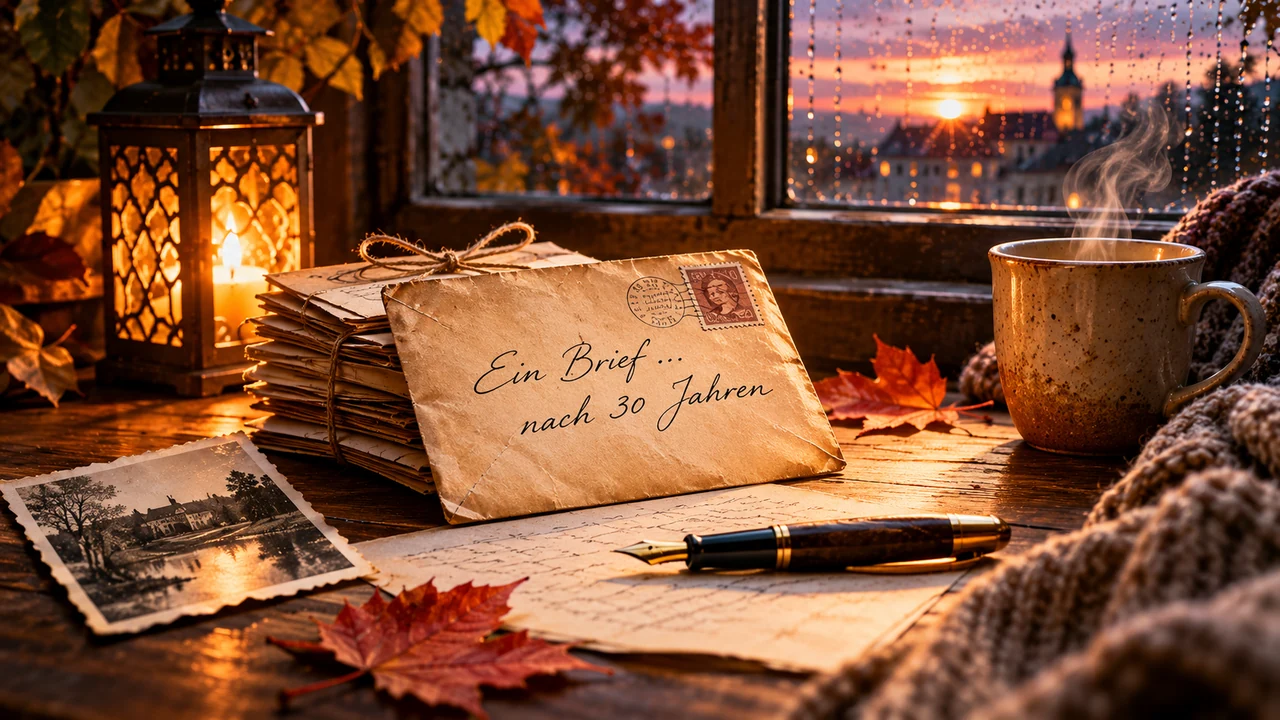
When the postal worker rang the bell that Friday, Clara was in no mood for interruptions. Soup was simmering on the stove, shopping bags were still in the hallway, and rain had begun to fall again. The woman at the door held an unusually thick envelope.
“It turned up when an old mail depot was cleared out,” she explained. “We managed to trace the address.”
Clara took it. Her maiden name was written on the front in handwriting she recognized immediately. Jonas.
She had not spoken that name aloud in years.
A summer that seemed endless
Thirty years earlier, Clara and Jonas had spent almost every evening by the river. She was twenty-two and dreamed of leaving town to become a photographer. He repaired bicycles in his father’s workshop and insisted that one day he would take her to the sea. They both knew summer was ending. Neither wanted to say so.
Then Clara was offered a place on a training course far away. On their last evening, she waited at the bridge. Jonas never came. The following morning, hurt and far too proud to knock on his door, she left.
A few months later, she sent him a postcard. There was no reply. Eventually, she learned to think about other things.
The words inside
Now she sat at her kitchen table. One corner of the envelope was torn, and the paper smelled faintly of dust. Inside was a single letter, dated the day after she had left.
Dear Clara, it began. I wasn’t at the bridge yesterday because my father was taken to hospital. I tried to find you, but nobody knew where you were staying. By the time I got back today, you’d already gone.
Clara stopped reading. She remembered how she had interpreted every minute of waiting as a choice he had made against her.
I’m not asking you to stay. I want you to take your photographs and see everything you want to see. I just need you to know I didn’t stay away because I didn’t care. If you ever come back, perhaps you’ll still find me at the workshop. And if you don’t, I hope you’re happy.
The letter ended simply: Jonas.
Clara read it twice. Then a third time. For thirty years she had carried a story whose most important chapter she had never known.
The workshop in the square
On Saturday she drove back to her hometown. The bridge had been rebuilt, the cinema had closed, and the little grocery store had become a café. But the bicycle workshop was still there. A freshly painted sign above the door read Winter Bicycles.
Inside, a grey-haired man was bent over a child’s bicycle. He looked up when the bell rang.
“Clara?”
It wasn’t like a scene from a film. Nobody rushed into anyone’s arms. They simply stood there, two people who had once known each other very well and had since lived entirely different lives.
She showed him the letter.
Jonas gave a quiet, disbelieving laugh. “I always thought you’d read it and didn’t want to answer.”
“And I thought you didn’t want to say goodbye.”
For a while, neither spoke. Then Jonas placed two mugs on the workbench. They told each other about children, jobs, losses, and the ordinary years in between. Jonas had been married; his wife had died four years earlier. Clara had a son and a life she liked, despite all its unexpected turns.
What Remains Unsaid Between Two People
Clara read the letter again, more slowly this time. At first she had searched only for an explanation. Now she noticed the small sentences in between: a remark about a rainy day, his concern about her exam, and an awkward attempt to encourage her. They were not grand declarations of love. That was precisely why she recognized the young man she had once known.
She put the envelope on the kitchen table and boiled water. While the tea steeped, she remembered how often she had continued the story in her head. Some years she had thought him cowardly, other years indifferent. At times she had insisted she no longer cared. Yet one unexplained farewell had gradually hardened into a certainty that no one had ever checked.
When she reached the workshop, she stopped across the street. Through the window she could see someone measuring a picture frame. She could have turned around. No one would have known. Instead she crossed the road, pushed open the door, and heard the little bell above it. She did not know whether the conversation would be easy. For the first time in thirty years, she wanted to have it anyway.
She was not trying to restore the past. Clara had built a life of her own, full of people, choices, and happy years that had nothing to do with this letter. She only wanted to discover whether an old memory was really as she had carried it all these years.
Not everything needs a second chance
As she was leaving, Jonas asked, “Do you think things would have been different if the letter had arrived?”
Clara looked at the workshop, the bicycles, and the autumn sunlight falling across the pavement.
“Certainly,” she said. “But I don’t know whether they would have been better.”
He nodded. It wasn’t a sad answer. It was an honest one.
Outside, Clara carefully tucked the letter into her bag. It hadn’t given her those lost years back. It hadn’t arrived with a new promise, either.
But it had done something smaller, and no less important: it had freed an old hurt from a misunderstanding.
Sometimes an answer comes too late to change the road we took, but in time to change how we remember it.
That evening Clara placed the letter beside her photo albums. Then she called her son, for no particular reason. She wanted him to know she was thinking of him. Not tomorrow. Today.
A story by der uNi